Passive House
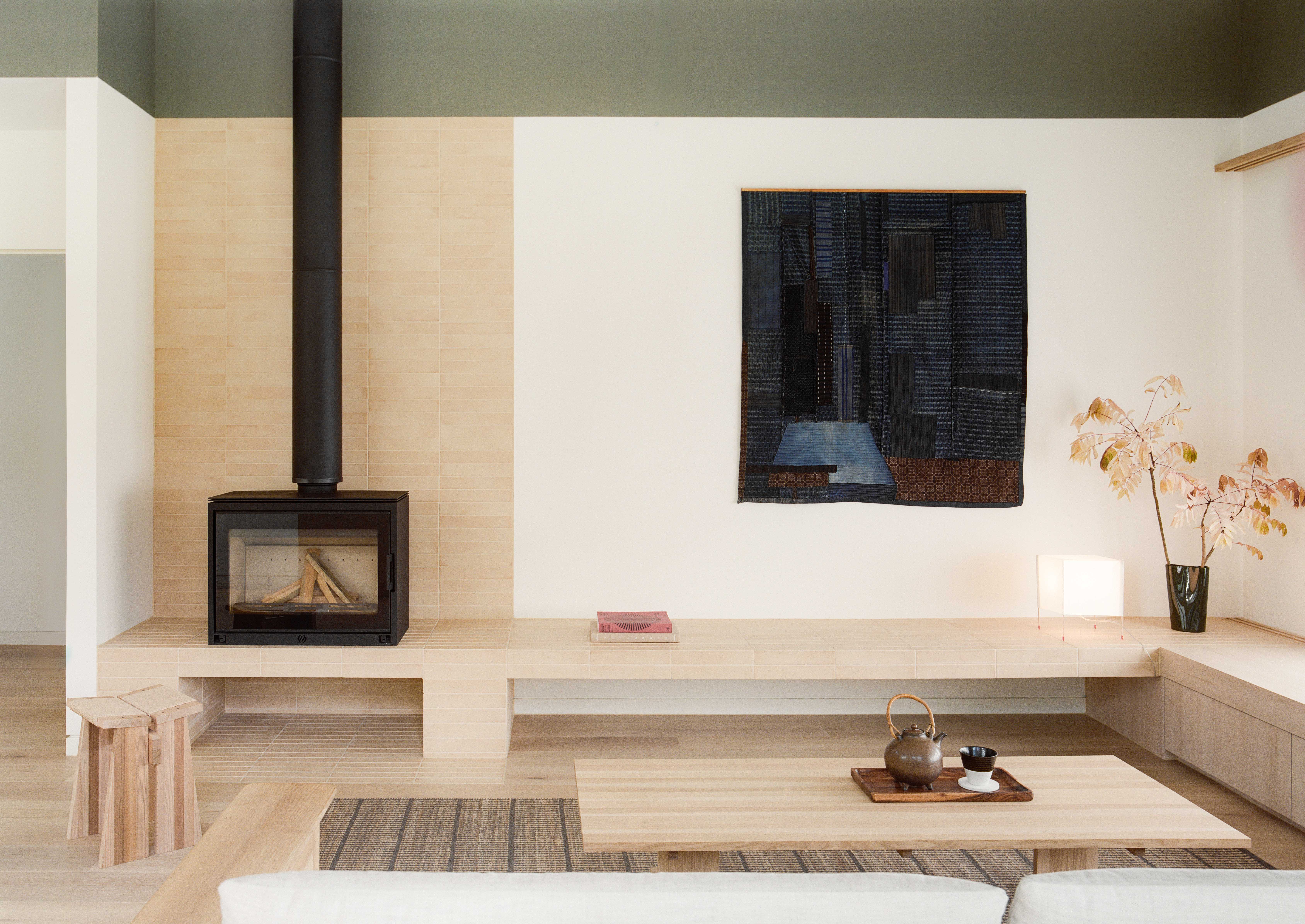
Passive House —
Design & Consultancy in Melbourne & the Yarra Valley
Japanese-Australian residential architecture grounded in Passivhaus principles, designed for Melbourne & the Yarra Valley climates.
Concept
A Passive House (Passivhaus) is a building designed to remain comfortable in every season while using a fraction of the energy of a conventional home. It's the world's most rigorous low-energy building standard, developed in Germany and adapted carefully for Australian climates.
In practice, a Passive House (Passivhaus) feels different the moment you step inside: even temperatures, fresh filtered air, and a stillness that comes from a well-sealed envelope. There is no harsh summer heat, no winter draughts, and very little need to run heating or cooling at all.
For owners, that means dramatically lower running costs, healthier indoor air, and a home that ages gracefully.
We design to the Passive House (Passivhaus) standard — not as a label, but as a discipline: every detail considered, every assumption tested, every joint detailed before it leaves the studio.
Principles
A continuous insulation blanket wraps the entire building envelope — floor, walls, roof — eliminating cold spots and reducing heat loss to a fraction of a standard build.
A carefully detailed air-control layer prevents uncontrolled draughts, which improves comfort, protects the structure from moisture damage, and is verified by a blower-door test before certification.
Triple-glazed (or carefully selected double-glazed) windows with insulated frames and warm-edge spacers transform glazing from a weak link into a contributor to comfort.
A balanced ventilation system delivers continuous fresh, filtered air to every habitable room while recovering heat from outgoing air — replacing leaky draughts with controlled freshness.
Junctions between elements (walls, slabs, windows) are detailed to eliminate thermal bridges, which are the hidden cause of mould, cold spots, and energy waste in conventional construction.
Approach
Kasumi Architecture is led by Yusuke Shiratori, a Certified Passivhaus Designer with the Passive House Institute (PHI) and a Registered Architect with the Architects Registration Board of Victoria (ARBV 20149, Class: Practising). We design with PHPP energy modelling, performance analysis, specifying adequate and optimised products and materials to each unique project and through to airtight and thermal-bridge-free detailing. When certification is pursued, we coordinate with independent Passive House certifiers.
Based in the upper Yarra Valley, we design for the specific climate, bushfire context, and rural-edge conditions of regional Victoria — temperature swings, smoke events, and the long winters that make Passive House (Passivhaus) performance especially valuable. We work with clients across greater Melbourne and regional Victoria.
Services
End-to-end architectural services for new homes, renovations, and extensions, designed to the Passive House (Passivhaus) standard — from site analysis and PHPP modelling through documentation, builder coordination, and contract administration.
Best for: owners who value craft, comfort, and a single relationship through the project.
For owners curious whether their existing house can be brought toward Passive House (Passivhaus) performance — without committing to a full rebuild. We assess the home as it stands, model its current performance, and present clear scenarios with the tradeoffs spelled out: upgraded windows and doors, improved thermal envelope, airtightness work, ventilation strategy.
You leave with a realistic picture of what's possible, what each scenario costs and delivers, and where to start.
Best for: owners of an existing home considering renovation or upgrade, who want a clear-eyed feasibility view before committing to changes.
FAQ